Disclosure: This post contains affiliate links, and some pieces Jennie has shared came from brand partnerships, including gifted products or paid collaborations. Our full disclosure.
The right rug is almost always bigger than you think. In a living room, choose a rug large enough that at least the front legs of every seat sit on it. In a bedroom, let it extend 18 to 24 inches past each side of the bed, and in a dining room, leave 24 inches or more beyond the table on every side so chairs stay on the rug when they're pulled out.
A rug that's too small is one of the most common reasons a room feels unfinished. The furniture looks like it's floating, and the rug reads like an island in the middle of the floor. The good news is that rug sizing follows a few simple, widely used rules. Once you know them, you can size a rug for almost any room in a few minutes with a tape measure.
Start with the standard rug sizes
Most rugs in the US come in a handful of standard sizes. Knowing them makes the rest of the decision much easier:
- 5 x 8 feet: small living rooms, under a small desk or reading chair, or at the foot of a bed.
- 6 x 9 feet: small living rooms and smaller bedrooms.
- 8 x 10 feet: the most common living room size, and a common choice under a queen bed.
- 9 x 12 feet: larger living rooms, many dining rooms, and under a king bed.
- 10 x 14 feet and up: large or open-plan rooms where the rug needs to anchor a big seating group.
Runners, usually 2.5 to 3 feet wide, come in lengths from about 6 to 12 feet or more.
Living room rug size
The goal in a living room is to connect the seating into one conversation area. There are three common layouts:
- All legs on the rug. Every piece of seating sits fully on the rug. This feels the most generous and works best in larger rooms, usually with a 9 x 12 or bigger.
- Front legs on the rug. The front legs of the sofa and chairs sit on the rug, and the back legs sit on the floor. This is the most popular approach because it ties everything together without requiring a huge rug. An 8 x 10 often works in an average living room.
- Floating rug. The rug sits only under the coffee table, with no furniture on it. This can work in a very small room, but it tends to make a space look smaller, so use it with care.
A few more rules of thumb help:
- Leave a border of bare floor. In most rooms, keep about 10 to 18 inches of floor showing between the rug and the walls. A rug that runs nearly wall to wall can look like carpet.
- Go a little wider than the sofa. A rug that extends at least a few inches past each end of the sofa looks intentional. One that's narrower than the sofa looks undersized.
- Center the rug on the seating, not the room. In an open plan, the rug defines the living area, so center it on the conversation group.

Wayfair
Rugs from the Amber Lewis x Loloi Morgan collection appear in 346 of Jennie's looks, more than any other rug family she links. Compare the sizes on the product page with the layout you taped out.
Wayfair
The Navy / Sand colorway appears in 81 of her looks. A front-legs-on layout usually means an 8 x 10 in an average living room.
Bedroom rug size
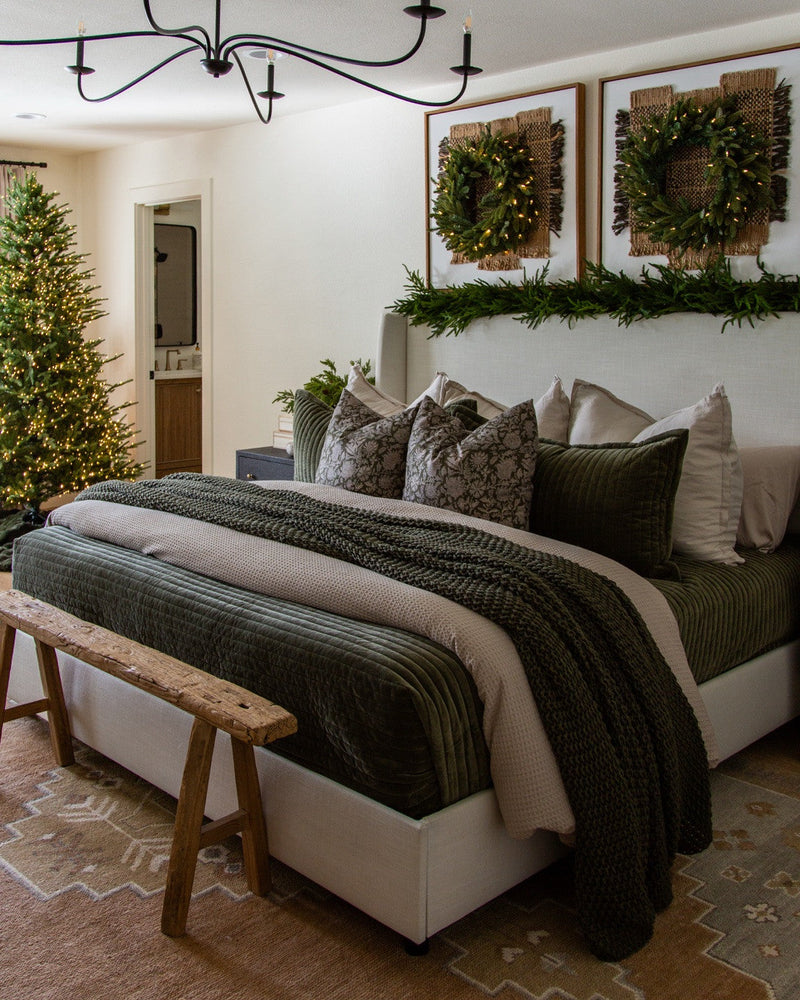
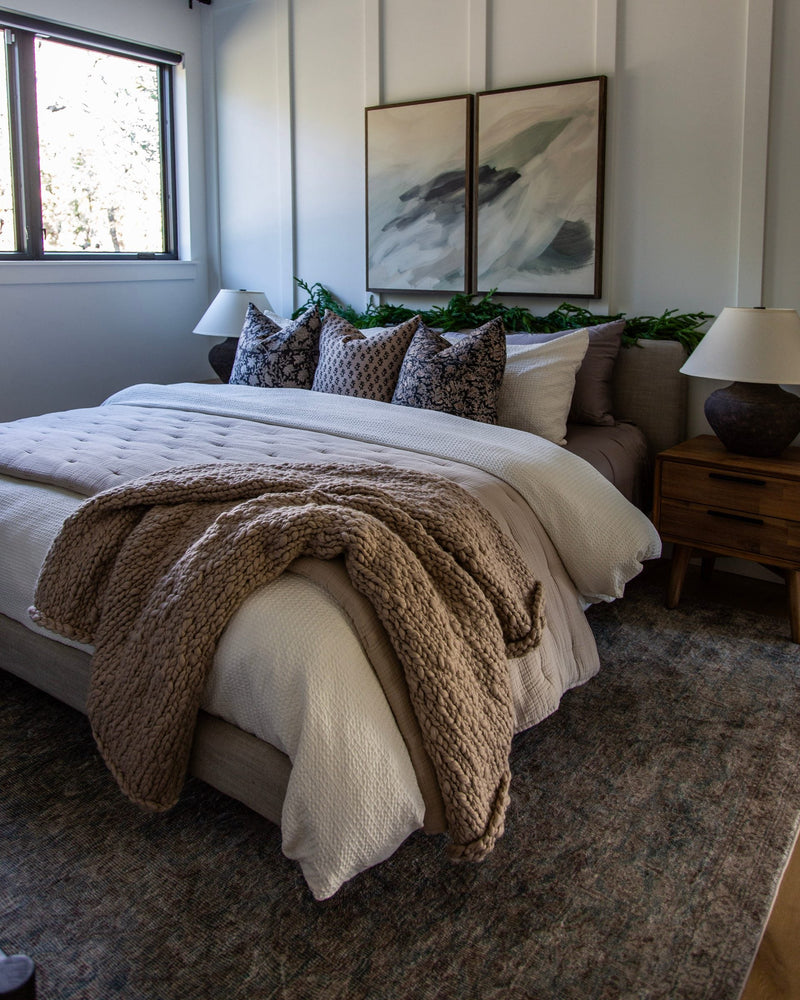
In a bedroom, you want soft footing on both sides of the bed when you step out in the morning. The common guideline is a rug that extends 18 to 24 inches past each side of the bed, and ideally past the foot as well.
- Queen bed: an 8 x 10, placed horizontally, is the usual choice.
- King bed: a 9 x 12 gives the most comfortable margin. An 8 x 10 can work, with less rug showing at the sides.
- Full or twin bed: a 5 x 8 or 6 x 9 usually works.
Most people start the rug a few inches in front of the nightstands, so the nightstands sit on the floor and the rug covers the lower two-thirds of the bed. That keeps the rug from being hidden and makes it go further.
If a large rug isn't in the budget, two runners, one on each side of the bed, are a practical alternative. A smaller rug at the foot of the bed can also work when the bed sits under a window or between doors.
Quince
Chloe hand-knotted wool rug, Cognac
Her most-linked Quince rug, in 90 looks. In a paid Quince partnership post about this rug, Jennie wrote: “I LOVE the warm, earthy tones and vintage-inspired pattern that make this wool area rug feel so timeless and collected.”
Wayfair
Her single most-linked rug colorway, in 113 looks. Compare the sizes on the product page with the bed guidelines above.
For more on the rest of the room, see A Weekend Bedroom Refresh.
Dining room rug size
A dining rug has one job: keep the chairs on the rug when someone pulls out to sit down. The standard guidance is to leave at least 24 inches, and ideally 30 to 36 inches, of rug beyond the edge of the table on every side.
To find your size, measure the table, then add about 4 to 6 feet to both the length and the width. A 4 x 6 foot table, for example, usually needs at least an 8 x 10 rug. Round and square tables pair well with round or square rugs, using the same rule.
Flat-weave or low-pile rugs are easiest under a dining table because chairs slide easily over them.
Hallways and entries
For a runner, leave a few inches of bare floor showing on each side and at each end. In an entry, choose a rug wide enough that the front door clears it easily when it opens.
How to test a rug size before you buy
This is the step that saves the most regret. Use painter's tape to outline the rug size on the floor, then live with it for a day or two. Walk around it, sit on the furniture, and see how much floor shows. If you're between two sizes, tape out both. In most rooms, the larger one is the better choice.
A rug pad is worth adding, too. The usual guideline is a pad about an inch smaller than the rug on each side, so the edges of the rug lie flat.
The rugs Jennie links most
Rugs are one of the pieces Jennie links most often. Of the 1,065 LTK looks she has posted since January 2024 that appear on our Shop the Look page, 742 link at least one rug. Rugs from the Amber Lewis x Loloi Morgan collection appear in 346 of them, and her most-linked colorways are Sunset / Ink (113 looks), Sea / Sage (94) and Navy / Sand (81). From Quince, the Chloe hand-knotted wool rug in Cognac appears in 90 looks.
On her Quince rugs, in an August 2026 LTK post, Jennie wrote: “The Fern, Lena, Chloe + Seraphine are some of my favorites because they give you that beautiful, collected look without the designer rug price tag.”
For a side-by-side look at patterns and colors, see Vintage-Style Rugs Compared.
Shop this look
The rugs Jennie has linked most often, from her LTK. Sizes, materials and current prices are on each retailer's page.
Frequently asked questions
Is it better to go bigger or smaller with a rug? When in doubt, go bigger. A rug that's slightly too large rarely looks wrong, while a rug that's too small is one of the most common styling mistakes.
What size rug goes under a king bed? A 9 x 12 is the most common choice because it leaves about 18 to 24 inches of rug on each side. An 8 x 10 can work if the room is tight.
Should the rug go under the nightstands? It doesn't have to. Most layouts start the rug just in front of the nightstands, so more of the rug shows around the bed.
How much floor should show around a living room rug? About 10 to 18 inches is a common range. Smaller rooms can go a little tighter, but avoid running the rug right up to the walls.
The short version
Measure the furniture group, not the room, and size up when you're unsure. Get the front legs of the seating on the rug in a living room, give yourself 18 to 24 inches on each side of the bed, and leave room for chairs to pull out at the table. Tape it out first, and the right size usually becomes obvious.
Browse every rug and piece Jennie links in the Shop, or see them styled in real rooms on Shop the Look.
Have a room question or a topic you would like us to cover? Get in touch through our contact page.